The Ultimate Guide to Nutrient-Dense, Gut-Healthy Gluten-Free Seeded Bread: Chewy, Nutty, and Wholesome
Finding a truly satisfying, wholesome, and structurally sound gluten-free bread can often feel like searching for a culinary unicorn. Many commercial or homemade gluten-free loaves suffer from major structural flaws: they crumble the moment a knife touches them, taste like cardboard, or rely on a complicated list of processed starches and gums. If you have ever wanted a rustic, nutrient-packed loaf that slices cleanly, boasts an incredible nutty chew, and comes together with zero fuss, your search ends here.
This homemade Gluten-Free Seeded Bread is an absolute game-changer. It requires no specialized culinary equipment, no fancy sourdough starter, and—best of all—no rise time. You simply whisk your dry components together, stir in your liquids, pour the batter into a loaf pan, and let the oven work its magic.
Beyond its sensational texture and rich, nutty flavor profile, this loaf is a nutritional powerhouse. In an era where modern diets often lack dietary diversity, health experts emphasize the importance of consuming a wide variety of plants to support a thriving gut microbiome. A commonly recommended wellness goal is to incorporate at least 30 different plant foods into your weekly routine. Remarkably, this single bread recipe packs up to 9 unique plants into every slice, making it one of the most delicious, effortless ways to nourish your gut health.
Part 1: The Nutritional Science and Art of Gluten-Free Seed Baking
Developing a superior gluten-free loaf requires an understanding of how structure works without gluten—the natural protein network that gives traditional wheat bread its elasticity and chew.
1. Harnessing the Binding Power of Psyllium Husk
In traditional baking, gluten traps air bubbles and creates a chewy crumb. In this recipe, that crucial structural role is filled by psyllium husk. When mixed with water, psyllium husk forms a gelatinous matrix that mimics the structural properties of gluten. It holds the heavy seeds and flours together while trapping moisture, ensuring your bread retains a soft, springy interior instead of crumbling apart. Furthermore, psyllium husk is a phenomenal source of soluble prebiotic fiber, acting as direct fuel for your beneficial gut microbes.
2. The Power of Seeds and Healthy Fats
Unlike standard white bread, which offers little nutritional value beyond empty carbohydrates, this loaf is swimming in healthy fats, plant-based proteins, and vital minerals.
- Walnuts and Flaxseeds: Rich in omega-3 fatty acids, which are heavily linked to cardiovascular health and reduced systemic inflammation. Daily consumption of nuts and seeds is associated with overall longevity and metabolic wellness.
- Sunflower, Sesame, and Pumpkin Seeds: Introduce an incredible array of magnesium, zinc, iron, and vitamin E, while providing that addictive, satisfying crunch in every bite.
3. Gut Microbiome Diversity in Every Slice
Your gut microbiome thrives on variety. By incorporating whole pseudo-grains like buckwheat flour alongside a diverse medley of seeds, nuts, and organic binders, you deliver a multifaceted feast to your digestive system. Each slice acts as a vehicle for diverse phytochemicals and dietary fiber, supporting smooth digestion and sustained energy levels throughout your day.
Step-by-Step Culinary Blueprint: Baking Your Seeded Loaf
Step 1: Combining the Dry Components
Begin by preheating your oven to 350°F (180°C) fan. In a large, spacious mixing bowl, measure out your whole flaxseeds, raw sunflower seeds, sesame seeds, pumpkin seeds, chopped walnuts, naturally gluten-free buckwheat flour, almond flour, psyllium husk, baking soda, and fine sea salt. Use a whisk to distribute all the dry elements evenly.
Step 2: Introducing the Liquids
Make a well in the center of your dry seed and flour mixture. Pour in the apple cider vinegar, extra-virgin olive oil, and filtered water. The apple cider vinegar will interact instantly with the baking soda, initiating a gentle effervescent reaction that helps give the dense loaf a slight lift during baking.
Step 3: Mixing and Resting the Batter
Using a sturdy spatula, stir the mixture vigorously until all the dry spots disappear and a uniform, thick batter forms. Do not panic if the mixture looks quite wet or runny at this stage—the psyllium husk needs time to absorb the liquids. Pour the batter into a parchment-lined loaf pan and let it rest undisturbed for 10 minutes. This rest period is non-negotiable; it activates the psyllium binding agent, turning the wet batter into a cohesive, scoopable mass.
Step 4: Baking to Golden Perfection
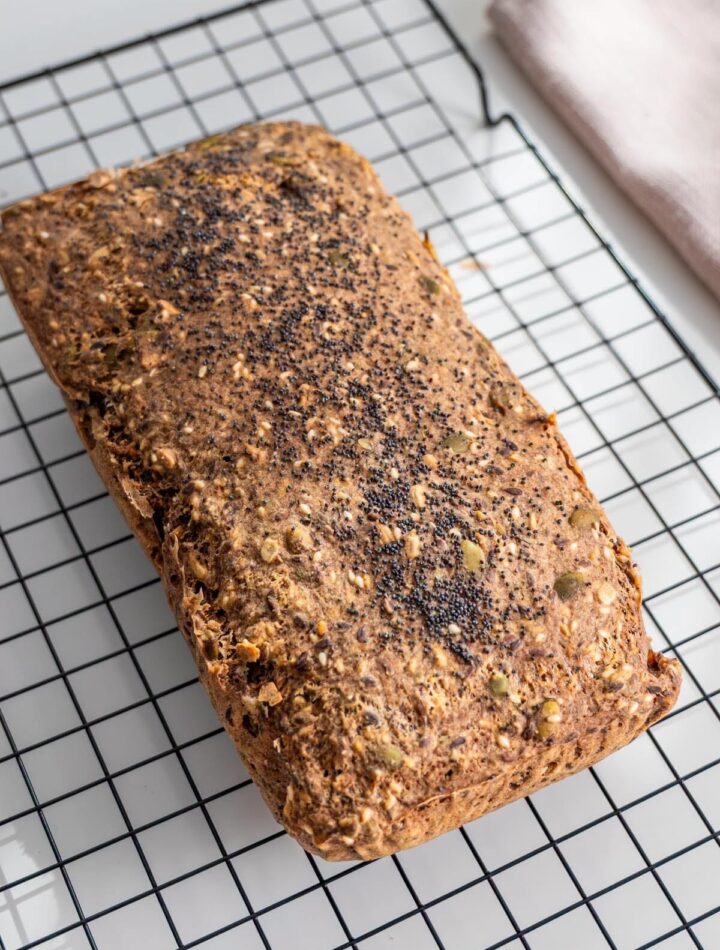
Transfer your loaf pan to the middle rack of your preheated oven. Bake undisturbed for approximately 90 minutes. Because of the dense seeds and high moisture content, a lengthy bake time is required to drive out excess moisture and crisp up the exterior crust into a deep golden-brown finish.
Step 5: The Crucial Cooling Stage
Once baked, remove the loaf from the oven and carefully lift it out of the pan using the parchment paper overhang. Place it immediately onto a wire cooling rack. Do not slice the bread while it is warm. Letting it cool completely allows the interior crumb to finish setting; slicing too early can trap steam and create a gummy texture.
Part 2: Simple Recipe Card
Wholesome Gluten-Free Seeded Bread
Prep time: 15 minutes | Rest time: 10 minutes | Bake time: 90 minutes | Yields: 1 standard loaf
Ingredients
- 1 cup raw walnuts, roughly chopped
- 3 tablespoons whole flaxseeds
- 1/2 cup raw sunflower seeds
- 1/3 cup sesame seeds
- 1/3 cup raw pumpkin seeds (pepitas)
- 1 1/4 cups gluten-free buckwheat flour
- 1/2 cup almond flour
- 3 tablespoons psyllium husk powder (or whole psyllium husk)
- 1 teaspoon baking soda
- 1 teaspoon fine sea salt
- 1 tablespoon apple cider vinegar
- 2 tablespoons extra-virgin olive oil
- 2 1/4 cups filtered water
Instructions
- Prep Oven & Pan: Preheat your oven to 350°F (180°C) fan mode. Line a standard loaf pan with parchment paper, leaving extra hanging over the sides for easy removal later.
- Mix Dry Elements: In a large mixing bowl, thoroughly combine the chopped walnuts, whole flaxseeds, sunflower seeds, sesame seeds, pumpkin seeds, buckwheat flour, almond flour, psyllium husk, baking soda, and sea salt.
- Add Liquids: Pour the apple cider vinegar, extra-virgin olive oil, and filtered water directly into the dry seed mixture.
- Stir and Rest: Stir well with a spatula until completely incorporated. Pour the batter into your prepared loaf pan and smooth out the top. Let it rest for 10 minutes so the psyllium husk can activate and thicken the mixture.
- Bake: Place on the middle rack and bake for 90 minutes until the crust feels firm and turns a deep, rich golden brown.
- Cool and Slice: Transfer the loaf to a wire cooling rack immediately. Allow it to cool completely (at least 2 hours) before slicing into thick, satisfying pieces.
Source: Adapted from traditional artisanal whole-food and gut-healthy baking techniques.