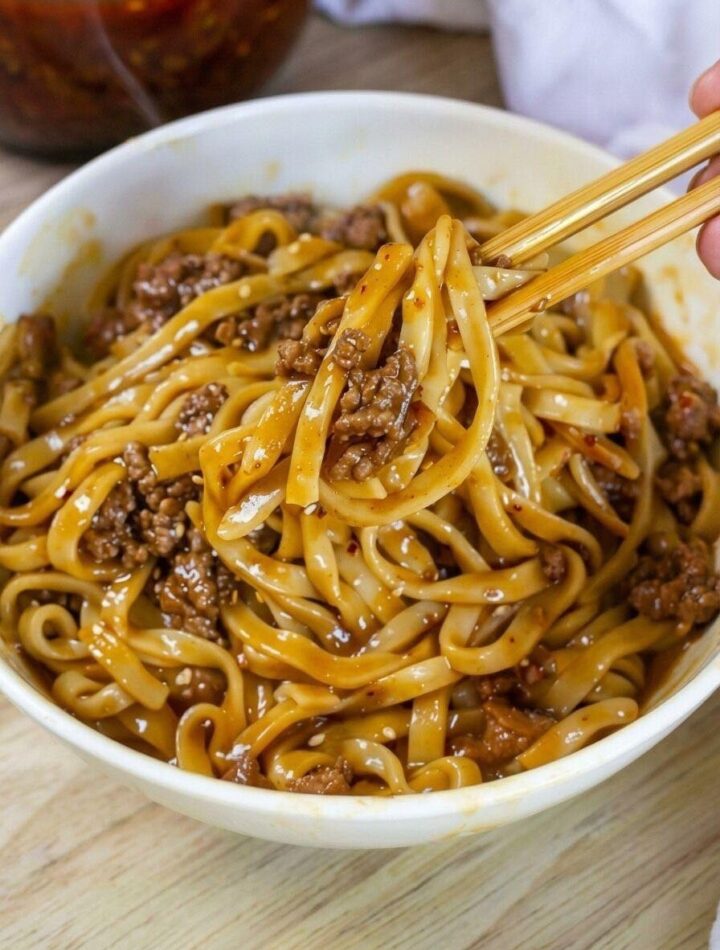
There are few meals as comforting as a warm bowl of saucy noodles tossed with tender beef and colorful vegetables. Sticky Mongolian Beef Noodles combine rich flavors, satisfying textures, and simple ingredients to create a meal that feels like restaurant-quality comfort food right at home. Every forkful is coated in a glossy garlic-ginger sauce that perfectly balances sweet, savory, and mildly spicy flavors.
If you’re searching for easy dinner recipes, Asian-inspired noodle dishes, family-friendly meals, homemade takeout alternatives, or quick weeknight dinners, this recipe deserves a permanent place in your collection. It is affordable, customizable, and surprisingly simple to prepare, making it ideal for busy households.
Unlike many complicated stir-fry recipes, this dish uses everyday pantry staples and transforms them into a flavorful noodle bowl that tastes far more impressive than the effort required. The combination of ground beef, linguine noodles, vegetables, and a rich Mongolian-style sauce creates a complete meal in one skillet.
Why Homemade Noodle Dinners Are More Popular Than Ever
Noodle recipes continue to rank among the most searched dinner ideas because they deliver maximum flavor with minimal preparation. They are filling, versatile, budget-friendly, and easy to customize according to personal preferences.
One of the biggest advantages of homemade noodle dishes is convenience. Most ingredients are commonly available in supermarkets, and preparation takes significantly less time than many traditional dinners. Families appreciate meals that can be cooked quickly without sacrificing flavor.
Another reason these recipes remain popular is their flexibility. Noodles pair beautifully with different proteins, vegetables, and sauces, making them perfect for using ingredients already available in the kitchen.
Sticky Mongolian Beef Noodles are especially appealing because they combine familiar flavors with a rich sauce that feels indulgent while remaining easy enough for beginner cooks.
The Magic Behind the Signature Mongolian-Inspired Sauce
Every unforgettable noodle dish begins with a flavorful sauce. In this recipe, the sauce is the true star.
The combination of soy sauce, hoisin sauce, brown sugar, garlic, ginger, and beef broth creates a rich coating that clings to every noodle strand. As the ingredients simmer together, they develop depth, complexity, and a beautiful glossy texture.
The sauce delivers multiple layers of flavor at once. The saltiness from soy sauce, sweetness from brown sugar, richness from beef broth, and aromatic notes from garlic and ginger create a balanced taste profile that keeps every bite exciting.
The final result is a silky sauce that transforms simple ingredients into a satisfying meal worthy of your favorite restaurant.
Soy Sauce Creates Rich Umami Flavor
Soy sauce serves as the foundation of the recipe’s flavor profile. Its deep savory notes enhance both the beef and noodles while contributing the classic umami taste associated with Asian-inspired cooking.
In addition to seasoning the dish, soy sauce helps create complexity and richness throughout the sauce. Every ingredient benefits from its bold yet balanced character.
Many home cooks prefer low-sodium soy sauce because it allows greater control over seasoning while still delivering excellent flavor.
Hoisin Sauce Adds Sweet and Tangy Depth
Hoisin sauce brings a unique combination of sweetness and complexity to the recipe.
Its thick texture helps create the signature sticky consistency that coats the noodles. The subtle sweetness balances the saltiness of soy sauce while adding another layer of flavor that makes the dish more satisfying.
Because hoisin sauce contains multiple seasonings, it contributes depth that would otherwise require several additional ingredients.
Brown Sugar Creates the Signature Sticky Glaze
One of the defining characteristics of Mongolian-style dishes is their glossy appearance. Brown sugar plays a major role in creating this effect.
As it melts into the sauce, it contributes mild caramel notes and balances the savory ingredients. During cooking, it helps produce the shiny glaze that clings beautifully to noodles and beef.
The sweetness remains subtle rather than overwhelming, creating a balanced flavor suitable for both children and adults.
Fresh Garlic and Ginger Deliver Authentic Flavor
Garlic and ginger are essential ingredients in many Asian-inspired recipes because they provide incredible aroma and depth.
Fresh garlic contributes savory richness and warmth, while ginger introduces brightness and a gentle spicy note. Together, they create an aromatic foundation that elevates the entire dish.
When sautéed briefly before adding the sauce ingredients, they release their natural oils and fragrance, helping build a more complex flavor profile.
Using fresh ingredients whenever possible provides the best results.
Beef Broth Creates a Rich, Smooth Sauce
Beef broth does more than add liquid. It strengthens the savory character of the dish while helping create a smooth, silky consistency.
As the sauce simmers, the broth absorbs flavors from the other ingredients and distributes them evenly throughout the noodles.
A quality beef broth can significantly enhance the overall richness of the final dish.
Why Ground Beef Is Ideal for This Recipe
Ground beef is one of the most practical proteins for quick dinners.
Unlike larger cuts of meat that require marinating or extended cooking times, ground beef cooks rapidly and absorbs flavors exceptionally well. This makes it perfect for weeknight meals when time is limited.
Another advantage is affordability. Ground beef often costs less than steak while still providing satisfying flavor and texture.
Because the meat is evenly distributed throughout the noodles, every bite contains a perfect balance of protein and sauce.
Many cooks prefer an 80/20 beef blend because its moderate fat content contributes additional tenderness and flavor.
Choosing the Best Noodles for Maximum Sauce Coverage
The type of noodle you select can influence the overall eating experience.
Linguine works exceptionally well because its flat surface area captures the sauce effectively. Every strand becomes coated in flavor, resulting in a satisfying texture and taste.
Other excellent options include:
• Spaghetti
• Lo Mein Noodles
• Udon Noodles
• Rice Noodles
• Egg Noodles
• Ramen Noodles
Each variety offers a slightly different texture while maintaining the delicious flavor profile of the recipe.
The Importance of Cooking Noodles Correctly
Properly cooked noodles can make a dramatic difference in the finished dish.
Cooking until al dente helps maintain texture after the noodles are mixed with sauce. Slightly firm noodles absorb flavor while retaining their structure.
Overcooked noodles can become soft and less enjoyable once combined with the sauce.
After draining, avoid rinsing the noodles unless necessary. The natural starch on their surface helps the sauce cling more effectively.
A One-Pan Dinner Designed for Busy Families
One reason this recipe remains a favorite is its simplicity.
After boiling the noodles, the remaining ingredients come together in a single skillet or wok. This method not only simplifies cleanup but also allows the flavors to blend naturally.
The beef is cooked first, followed by the aromatics. The sauce is then prepared and simmered until slightly thickened. Finally, the vegetables and noodles are added, allowing everything to absorb the rich flavors.
The result is a complete meal containing protein, vegetables, and carbohydrates in one satisfying bowl.
Vegetables That Add Color, Texture, and Nutrition
Fresh vegetables enhance both the visual appeal and nutritional value of the dish.
Bell peppers contribute crunch and sweetness.
Broccoli provides texture and vibrant color.
Carrots add natural sweetness and visual contrast.
Green onions deliver freshness and a mild onion flavor that complements the rich sauce.
Additional vegetables that work beautifully include:
• Mushrooms
• Snap Peas
• Snow Peas
• Baby Corn
• Bok Choy
• Zucchini
Because this recipe is highly adaptable, you can easily use seasonal produce or family favorites.
Why Homemade Is Better Than Restaurant Takeout
Preparing this dish at home offers several advantages over ordering takeout.
You can control sodium levels, sweetness, ingredient quality, and spice intensity. Homemade cooking also allows you to increase vegetables and customize portions according to your needs.
Many restaurant noodle dishes contain excess oil and preservatives. This homemade version delivers similar flavors while giving you complete control over what goes into the meal.
It is also significantly more economical, especially when feeding multiple people.
Perfect for Weekly Meal Prep
Sticky Mongolian Beef Noodles store exceptionally well, making them an excellent choice for meal preparation.
Many people find the flavors become even richer after resting overnight in the refrigerator.
Portion the noodles into individual containers for quick lunches throughout the week. When reheating, simply add a splash of broth or water to loosen the sauce.
For longer storage, freeze the cooked beef and sauce separately and combine them with freshly cooked noodles when serving.
Easy Ways to Customize the Recipe
One of the best features of this recipe is its flexibility.
Turn Up the Heat
If you enjoy spicy food, try adding:
• Extra red pepper flakes
• Chili garlic sauce
• Sriracha
• Chili oil
Increase the Protein
For a heartier meal, add:
• Fried eggs
• Soft-boiled eggs
• Grilled chicken
• Shrimp
• Crispy tofu
Create a Lower-Carb Version
Replace traditional noodles with:
• Zucchini noodles
• Cabbage noodles
• Shirataki noodles
Make It Gluten-Free
Use:
• Gluten-free noodles
• Tamari in place of soy sauce
• Gluten-free hoisin sauce
Best Side Dishes to Serve With Mongolian Beef Noodles
This flavorful noodle bowl pairs wonderfully with:
• Asian cucumber salad
• Steamed broccoli
• Garlic green beans
• Vegetable spring rolls
• Stir-fried vegetables
• Crispy wontons
Refreshing drinks such as iced tea, citrus beverages, or sparkling water also complement the rich flavors beautifully.
Pro Tips for Outstanding Results
• Use fresh garlic and ginger whenever possible.
• Avoid overcooking the noodles.
• Simmer the sauce long enough to develop flavor.
• Taste before serving and adjust seasoning as needed.
• Add broth gradually if the sauce thickens too much.
• Toss frequently to ensure even coating.
• Garnish just before serving for maximum freshness.
Why This Recipe Becomes a Family Favorite
The combination of sweet and savory flavors appeals to a wide range of tastes. Children often enjoy the mild sweetness of the sauce, while adults appreciate the rich umami flavor and satisfying texture.
Because it is affordable, quick, and adaptable, many families add it to their regular dinner rotation.
Most importantly, it delivers comforting restaurant-style flavor without requiring advanced cooking skills or expensive ingredients.
Final Thoughts
Sticky Mongolian Beef Noodles prove that homemade comfort food can be easy, budget-friendly, and packed with flavor. Tender noodles, savory ground beef, crisp vegetables, and a rich garlic-ginger sauce come together to create a meal that satisfies every craving.
Whether you’re planning a weeknight dinner, preparing meals ahead of time, or looking for a better-than-takeout recipe, this noodle bowl delivers delicious results every time. One taste and it may become your new favorite homemade noodle recipe.
Part 2: Sticky Mongolian Beef Noodles Recipe
Recipe Overview
Prep Time: 10 Minutes
Cook Time: 25 Minutes
Total Time: 35 Minutes
Yield: 4–6 Servings
Ingredients
For the Noodles
• 12 oz (340g) linguine noodles
For the Beef Mixture
• 1 lb (450g) ground beef
• 4 garlic cloves, finely minced
• 1 tablespoon ginger paste or freshly grated ginger
For the Sticky Mongolian Sauce
• 1 cup beef broth
• ⅓ cup soy sauce
• ¼ cup hoisin sauce
• 2 tablespoons brown sugar
• ½ teaspoon black pepper
• ½ teaspoon red pepper flakes (or to taste)
For the Vegetables
• 1 bell pepper, thinly sliced
• 1 cup broccoli florets
• 1 carrot, shredded
• 3 green onions, sliced (reserve some for garnish)
Optional Garnishes
• Sesame seeds
• Additional green onions
• Chili flakes
• Lime wedges
• Chili oil drizzle
Directions
Step 1: Prepare the Noodles
Bring a large pot of lightly salted water to a rolling boil.
Cook the linguine according to package instructions until al dente.
Drain thoroughly and set aside.
Step 2: Cook the Ground Beef
Heat a large skillet or wok over medium-high heat.
Add the ground beef and cook for 6–8 minutes, breaking it apart as it browns.
Drain excess fat if necessary.
Step 3: Add Garlic and Ginger
Mix in the minced garlic and ginger.
Cook for about 1 minute until fragrant.
Step 4: Build the Sauce
Pour in:
• Beef broth
• Soy sauce
• Hoisin sauce
• Brown sugar
• Black pepper
• Red pepper flakes
Stir well and simmer for 10–15 minutes until slightly reduced and glossy.
Step 5: Stir-Fry the Vegetables
Add the bell pepper, broccoli, carrot, and green onions.
Cook for 3–4 minutes until crisp-tender.
Step 6: Combine and Finish
Add the cooked noodles to the skillet.
Toss everything together until evenly coated.
Cook for an additional 2–3 minutes.
If needed, add a few tablespoons of beef broth to loosen the sauce.
Step 7: Garnish and Serve
Top with sesame seeds, green onions, chili flakes, or a drizzle of chili oil.
Serve immediately while hot.
Storage Instructions
• Refrigerate leftovers in an airtight container for up to 4 days.
• Reheat gently with a splash of broth or water.
• Freeze the cooked beef and sauce separately for up to 2 months.
Estimated Nutrition Per Serving
Calories: 680
Protein: 28g
Carbohydrates: 95g
Fat: 22g
Fiber: 4g
Nutritional values are estimates and may vary based on ingredient brands and serving sizes.
Source
Original recipe article created and rewritten from the user-provided recipe using unique wording, expanded cooking information, and SEO-focused food blogging structure. No text has been copied from the source material.